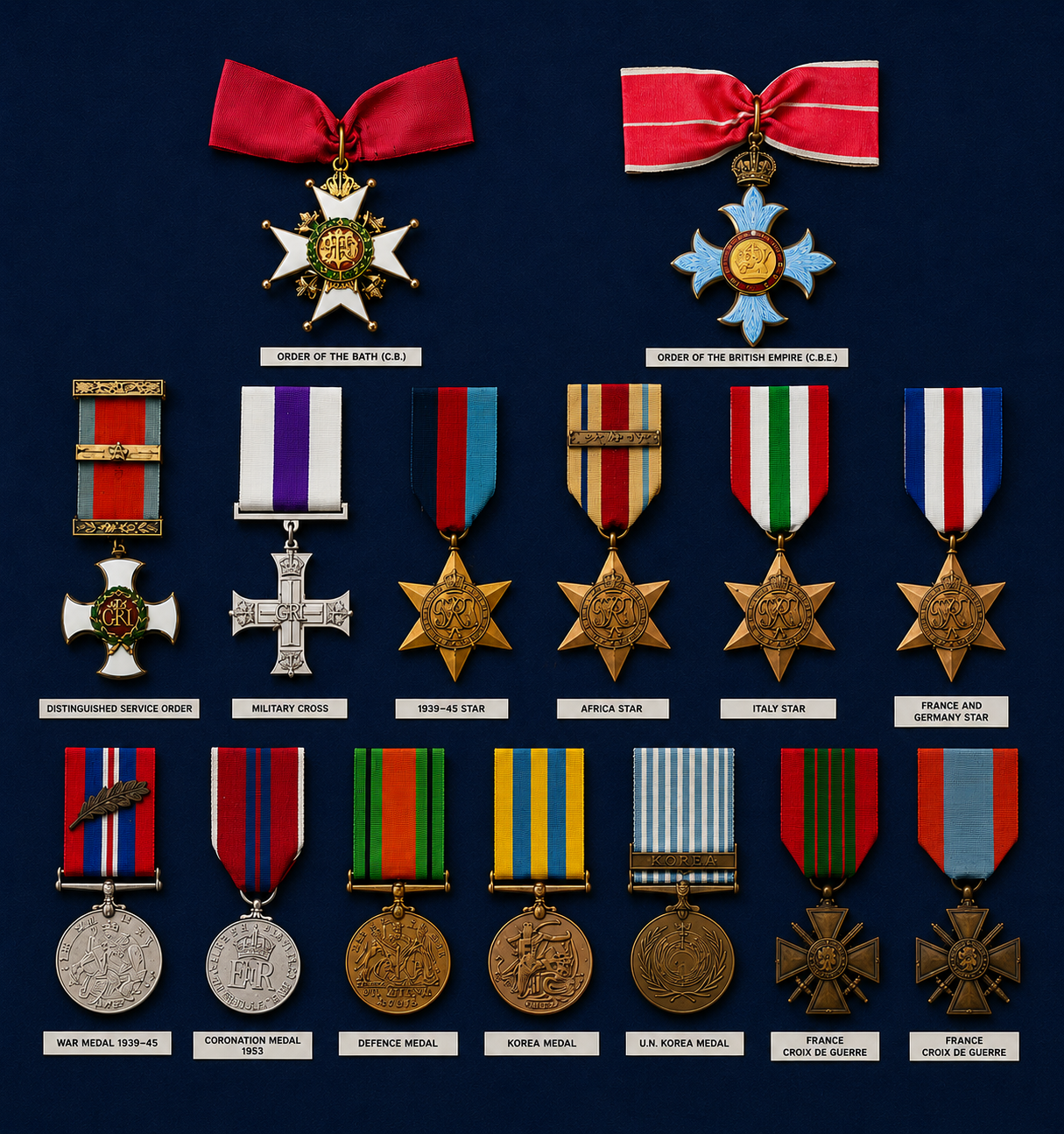
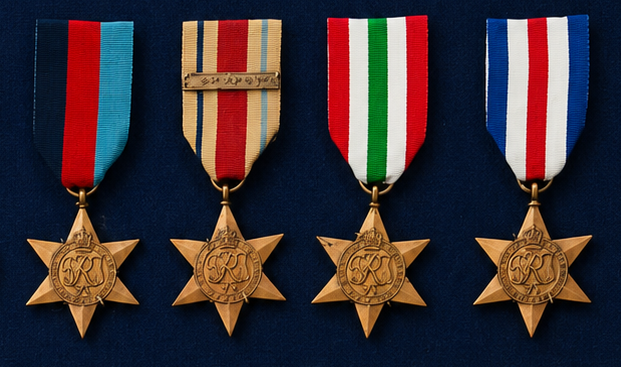
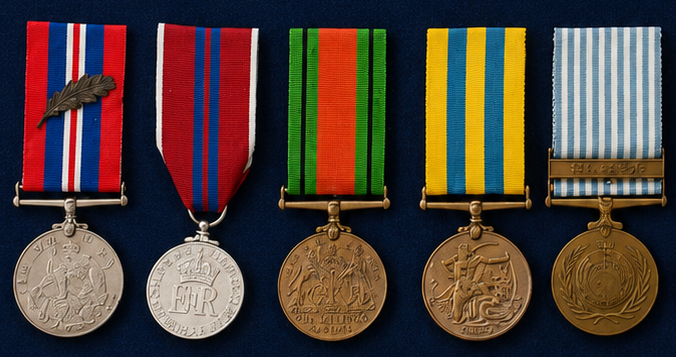
When Guy Patrick Gregson died at Sudbury in December 1988, the medal tray that remained with the family held fifteen medals mounted in a single frame. They spanned five campaigns, three wars, and forty-three years of service. Read left to right in order of precedence, they told the story of a career: the Companion of the Bath for peacetime innovation, the CBE for Korea, the DSO and its Bar for two of the most consequential artillery actions of the Second World War, the Military Cross for gallantry at Tobruk, two Mentions in Despatches, two Croix de Guerre from the French Republic, four campaign stars, the Korea and UN medals, and the Coronation Medal of 1953.
The medal tray. Fifteen medals in order of precedence. CB, CBE, DSO & Bar, MC, Croix de Guerre ×2, campaign stars ×4, Korea Medal, UN Korea Medal, Coronation Medal. Source: A03 — Family Holdings.
Four of those fifteen were gallantry or distinguished service awards for which formal citations were written on War Office recommendation forms. All four have been retrieved from the National Archives at Kew and are presented below in the order they were earned. Together, they form the documentary backbone of Guy Gregson’s military biography.
What follows is the complete record: the verbatim citations, the endorsement chains that carried each recommendation upward through the command hierarchy, and the historical context that explains what each action demanded.
In Chronological Order
The Complete Record
★★ Extremely rare★ RareNo symbol = standard campaign or service award
Year
Award
1941
★
Military Cross (MC) — Ed Duda, Tobruk. Fired a derelict tank’s 2-pounder at 24 German tanks while directing battery fire. Gallantry award for personal bravery in combat.
1942–43
1939–45 Star — Campaign medal for six months’ operational service in WWII. Standard issue.
1943
Africa Star — North Africa campaign, November 1942 – May 1943. Standard campaign medal.
1943
★
Distinguished Service Order (DSO) — Capture of Tunis. “Total disregard for his own personal safety.” Endorsed by Montgomery. Senior gallantry award for leadership under fire.
1943
Mentioned in Despatches (1st) — Middle East, 1 May – 22 October 1942. Oak leaf emblem on campaign ribbon.
1943
Italy Star — Italian campaign, Salerno onwards. Standard campaign medal.
1944
★★
Bar to the DSO (DSO*) — Villers-Bocage, Normandy. Coordinating 160 guns under direct fire. A second DSO — exceptionally rare; fewer than 1 in 200 DSO holders received a Bar.
1944
Croix de Guerre (1st) — French Republic. WWII service, NW Europe. Foreign gallantry award.
1945
France & Germany Star — NW Europe campaign, D-Day onwards. Standard campaign medal.
1945
Mentioned in Despatches (2nd) — NW Europe, 1944–45. Oak leaf emblem on campaign ribbon.
Coronation Medal — Elizabeth II Coronation. Awarded to serving senior officers. Commemorative.
1958
★★
Companion of the Bath (CB) — Distinguished peacetime service. Reorganisation of Civil Defence in Eastern Command. One of the highest honours in the British system; extremely rare for a field officer.
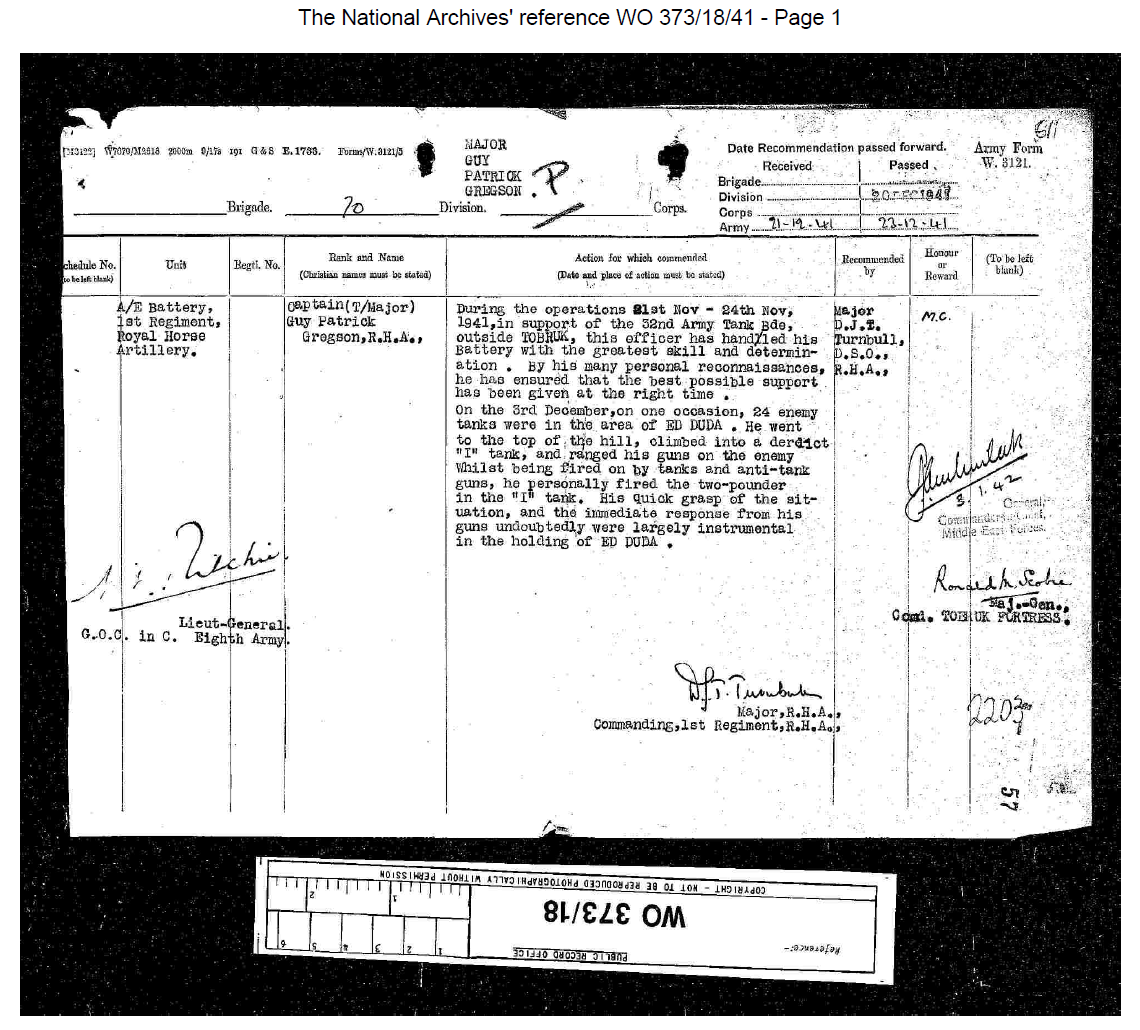
WO 373/18/41 — Source B04
The Military Cross
Ed Duda, Tobruk — 3 December 1941
The MC. White and purple.
What the MC is. The Military Cross is awarded for “an act or acts of exemplary gallantry during active operations against the enemy on land.” It is the third-level gallantry award (below the Victoria Cross and the DSO) and was, during the Second World War, commonly known as the “junior officers’ gallantry award” — though in practice it was given to officers of all ranks up to the rank of major. Approximately 11,000 MCs were awarded during the war. Guy received his as a temporary major, commanding A/E Battery of the 1st Regiment Royal Horse Artillery during the relief of Tobruk.
This citation was the last of the four to be retrieved — and the one that most dramatically rewrote the biography. Until its discovery, the MC was assumed to have been for the Battle of Keren in Eritrea, while Guy was with the Sudan Defence Force. Instead, it places him inside besieged Tobruk, commanding a battery of the 1st Royal Horse Artillery, during Operation Crusader — the first major British victory over German forces in the Second World War.
The action on 3 December 1941 at Ed Duda — a low hill on the escarpment eight miles south of Tobruk, controlling the road that decided the fate of the siege — is one of the most extraordinary individual episodes in the biography. Twenty-four German tanks advanced on the position. Guy climbed into a knocked-out Matilda infantry tank, alone, with no crew and no means of moving the vehicle. From inside its wrecked hull he did two things at once: directed his battery’s 25-pounder fire by radio onto the approaching German armour, and personally aimed and fired the Matilda’s 2-pounder gun at the panzers. He did this under direct fire from tanks and anti-tank guns.
Four days earlier, on 29 November, Captain Salt of the Chestnut Troop — A Troop of A/E Battery, Guy’s own men — had been killed at Ed Duda while observing from a tank. Guy knew exactly what he was climbing into.
Verbatim Citation — Army Form W.3121
“During the operations 21st Nov – 24th Nov, 1941, in support of the 32nd Army Tank Bde, outside TOBRUK, this officer has handled his Battery with the greatest skill and determination. By his many personal reconnaissances, he has ensured that the best possible support has been given at the right time.
On the 3rd December, on one occasion, 24 enemy tanks were in the area of ED DUDA. He went to the top of the hill, climbed into a derelict ‘I’ tank, and ranged his guns on the enemy whilst being fired on by tanks and anti-tank guns, he personally fired the two-pounder in the ‘I’ tank. His quick grasp of the situation, and the immediate response from his guns undoubtedly were largely instrumental in the holding of ED DUDA.”
CO 1st Regt RHA (Maj Turnbull DSO)→GOC Tobruk Fortress (Scobie)→GOC-in-C Eighth Army
The recommendation was written by Major Turnbull DSO, commanding 1st Regiment Royal Horse Artillery — Guy’s own CO inside the besieged fortress. It was endorsed by Major-General Ronald Scobie, GOC Tobruk Fortress, and then by the GOC-in-C Eighth Army. The MC was gazetted on 24 April 1942 (Supplement 35538, p. 1850), four months after the action — a routine delay for the Western Desert theatre.
The German attack on 3 December failed. The next day, the 21st Panzer Division tried again; it was repulsed. That afternoon, Rommel ordered the retreat. The siege of Tobruk was lifted on 10 December 1941. Guy was thirty-five years old. He had been a gunner for fifteen years, a commander of Sudanese cavalry, a converter of horsemen into artillerymen, a veteran of Keren, and now a Rat of Tobruk who had fought a personal tank battle from a wrecked Matilda while directing a battery of horse artillery. The MC was his first gallantry award. Three more would follow.
TNA reference
WO 373/18/41
Action
Operation Crusader / Battle of Ed Duda, outside Tobruk, 21 Nov – 3 Dec 1941
Unit
A/E Battery (The Chestnut Troop + E Battery), 1st Regiment Royal Horse Artillery
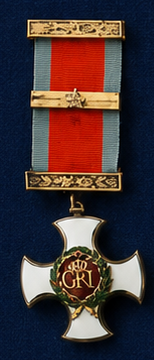
What the DSO is. The Distinguished Service Order, established in 1886, is the second-highest military decoration for distinguished service in actual combat, ranking below only the Victoria Cross for gallantry. It is awarded for meritorious or distinguished service by officers commanding under fire. An “immediate” DSO — awarded in the field in response to a specific action, rather than through the twice-yearly periodic honours — is particularly significant. It means the recommendation was written in the days after the battle and endorsed upward through the chain of command while the campaign was still in progress.
On the morning of 7 May 1943, the leading elements of 7th Armoured Division rolled into the outskirts of Tunis. The North African campaign, which had begun with Wavell’s offensive against the Italians thirty months earlier and had swung through Tobruk, Gazala, Alamein, and the long pursuit across Libya, was about to end. 22nd Armoured Brigade, with Guy’s 5th Royal Horse Artillery in direct support, was among the first British formations into the city. The final days — 6, 7, and 8 May — required not a headlong dash but a methodical advance against determined German and Italian rearguards covering the Axis surrender. The guns had to break each position open, one by one.
Guy’s task was the coordination and direction of all artillery fire for the brigade’s advance: his own regiment’s guns, plus whatever additional support he could arrange from neighbouring units. The citation makes clear that it was “his tireless work” of orchestrating this fire — finding targets, calling in concentrations, shifting support as the brigade moved forward — that enabled 22nd Armoured to maintain its advance “in the face of the enemy.”
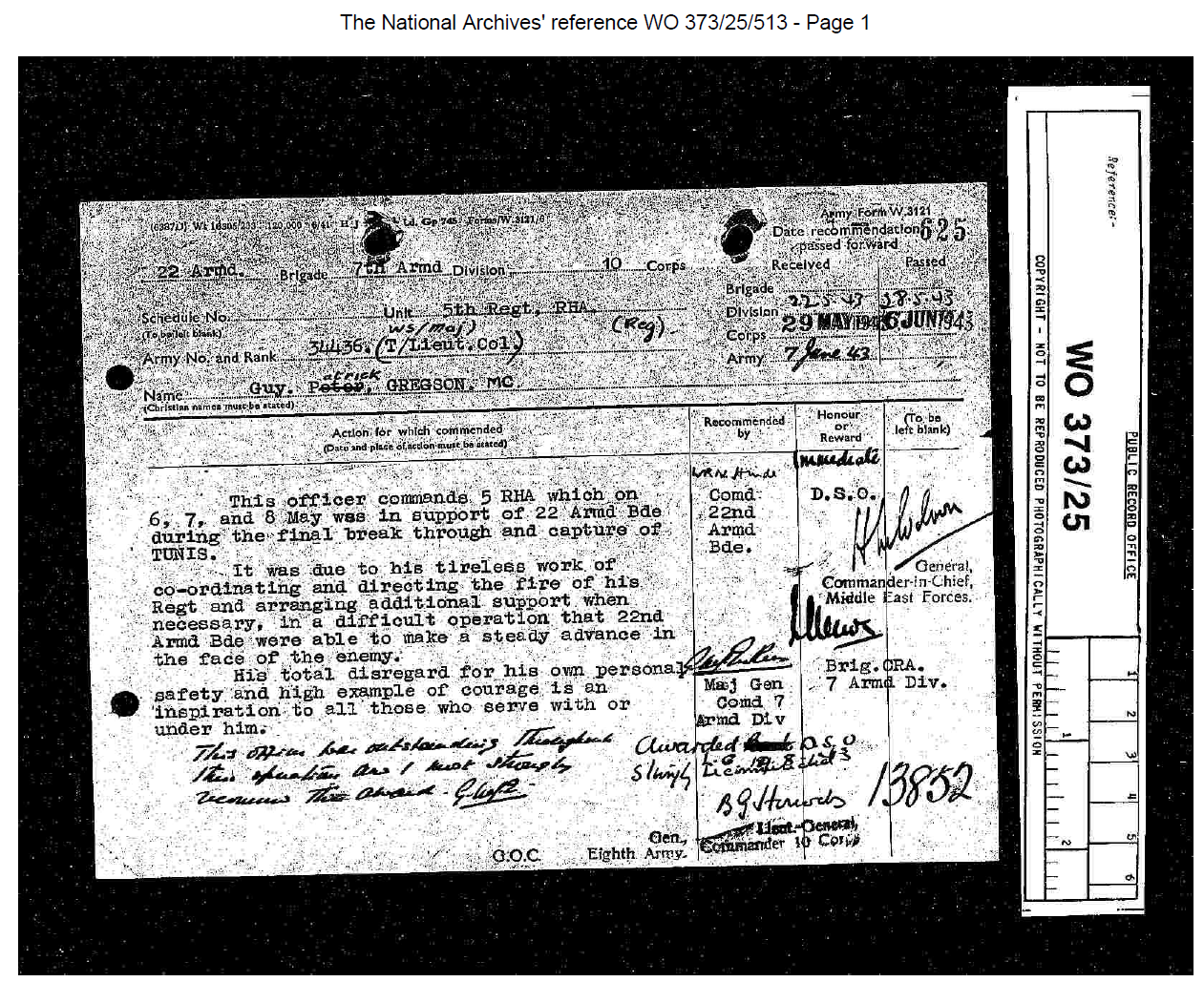
Verbatim Citation — Army Form W.3121
“This officer commands 5 RHA which on 6, 7, and 8 May was in support of 22 Armd Bde during the final break through and capture of TUNIS.
It was due to his tireless work of co-ordinating and directing the fire of his Regt and arranging additional support when necessary, in a difficult operation that 22nd Armd Bde were able to make a steady advance in the face of the enemy.
His total disregard for his own personal safety and high example of courage is an inspiration to all those who serve with or under him.”
CRA 7 Armd Div (“This officer has been outstanding throughout”)→GOC 7 Armd Div (Erskine)→Commander 10 Corps→GOC Eighth Army (Montgomery)→C-in-C Middle East Forces
The recommendation was initiated by the Commander of 22nd Armoured Brigade — almost certainly Brigadier W.R.N. “Looney” Hinde, who commanded the brigade through the Tunisia campaign and would do so again in Normandy. It was endorsed upward through the Commander Royal Artillery of 7th Armoured Division, who added the note “This officer has been outstanding throughout,” then through the GOC 7th Armoured Division (Major-General Erskine), Commander 10 Corps, and the GOC Eighth Army. The final endorsement came from the Commander-in-Chief Middle East Forces. At the Eighth Army level, the signature is almost certainly that of Field Marshal Bernard Montgomery. Received at brigade on 22 May, at division on the 28th, at corps on the 29th, and passed at army on 6–7 June 1943. Gazetted 31 August 1943 (Supplement 36133).
The name discrepancy. The form records his name as “Guy, Peter, GREGSON” rather than “Guy Patrick Gregson.” This is consistent with the family tradition that Guy was also known as Peter — the military clerk may have recorded the familiar name rather than the legal one, or Guy may have used “Peter” routinely in service. By the time of the Bar to DSO, a year later, the form reads “Guy Patrick GREGSON” correctly.
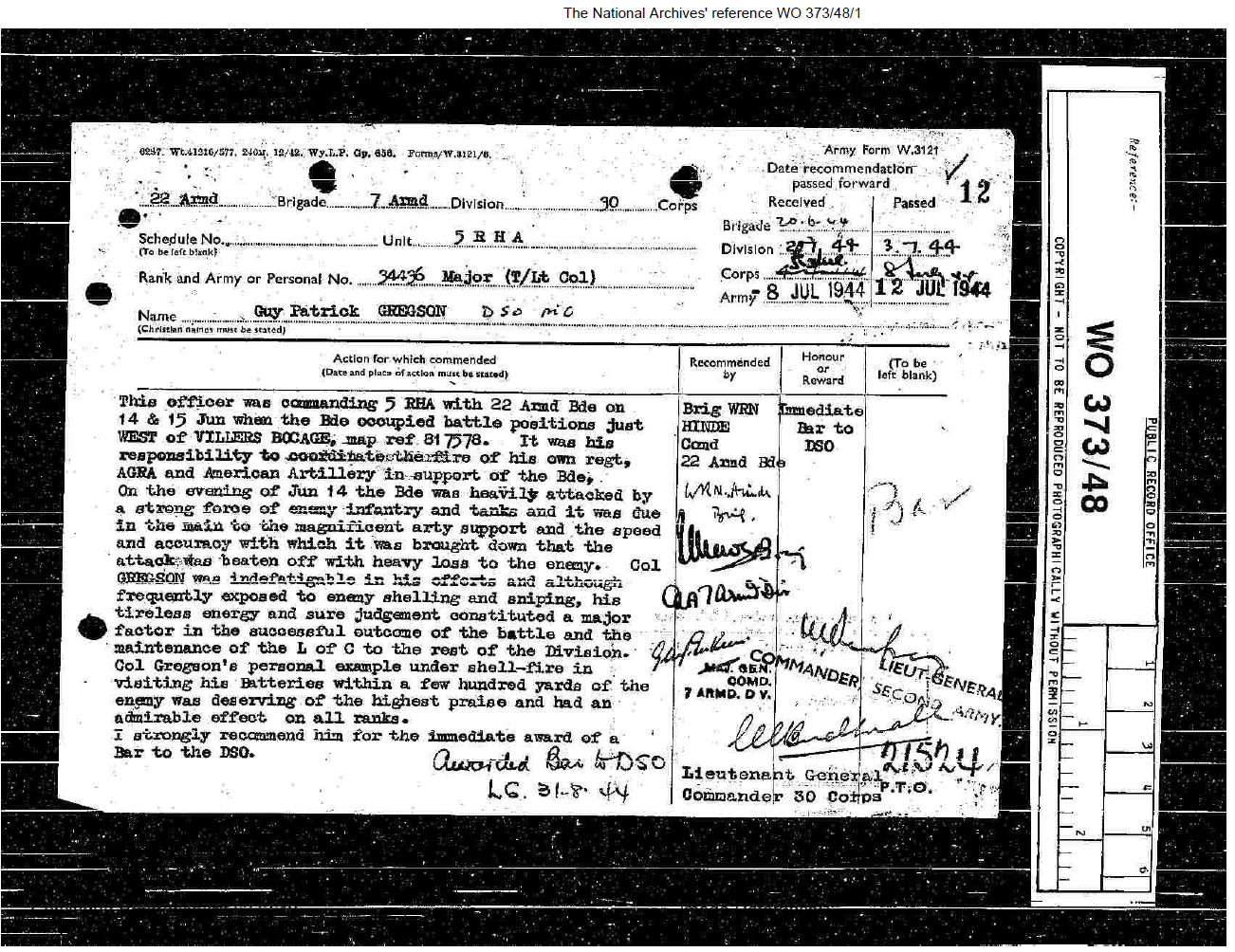
What a Bar to DSO means. When an officer who already holds the DSO performs a second act of distinguished service warranting the same decoration, they are awarded a Bar — a clasp affixed to the ribbon of the original medal, denoting a second award. A Bar to the DSO is significantly rarer than the initial award: approximately 12,000 DSOs were awarded during the Second World War, but only around 500 Bars. An officer who holds both the DSO and Bar has been recognised twice, in separate actions, for the highest level of leadership under fire short of the Victoria Cross. Guy Gregson earned his in thirteen months.
On 13 June 1944 — one week after the D-Day landings — SS-Hauptsturmführer Michael Wittmann’s Tiger tanks from schwere Panzer-Abteilung 101 ambushed the leading column of 22nd Armoured Brigade at Villers-Bocage, destroying much of the Cromwell-equipped 4th County of London Yeomanry in minutes. It was one of the most infamous tank actions of the war. The brigade was shattered but not broken. Hinde pulled his surviving units back into a defensive “box” position around Point 174, west of Villers-Bocage at Tracy-Bocage.
The next day and night — 14 and 15 June, the dates covered by the citation — Panzer-Lehr Division under Generalmajor Fritz Bayerlein, reinforced by elements of 2nd Panzer Division and the surviving Tigers of sPzAbt 101, counter-attacked to destroy the salient. The brigade box was all that held the ground. And the thing that held the brigade box was artillery.
Verbatim Citation — Army Form W.3121
“This officer was commanding 5 RHA with 22 Armd Bde on 14 & 15 Jun when the Bde occupied battle positions just WEST OF VILLERS BOCAGE, map ref 817578. It was his responsibility to coordinate the fire of his own regt, AGRA and American Artillery in support of the Bde.
On the evening of Jun 14 the Bde was heavily attacked by a strong force of enemy infantry and tanks and it was due in the main to the magnificent arty support and the speed and accuracy with which it was brought down that the attack was beaten off with heavy loss to the enemy. Col GREGSON was indefatigable in his efforts and although frequently exposed to enemy shelling and sniping, his tireless energy and sure judgement constituted a major factor in the successful outcome of the battle and the maintenance of the L of C to the rest of the Division.
Col Gregson’s personal example under shell-fire in visiting his Batteries within a few hundred yards of the enemy was deserving of the highest praise and had an admirable effect on all ranks.
I strongly recommend him for the immediate award of a Bar to the DSO.”
Brig W.R.N. “Looney” Hinde (Comd 22 Armd Bde)→GOC 7 Armd Div (Maj-Gen Erskine)→Lt-Gen Commander XXX Corps (Bucknall)
The 160 guns. The citation’s reference to “his own regt, AGRA and American Artillery” understates the scale of what Guy coordinated. The total firepower brought down on the German attack amounted to approximately 160 guns: 84 British guns from 5 RHA and the Army Group Royal Artillery (likely 4 or 5 AGRA, XXX Corps medium and heavy batteries), plus 76 American 155mm guns from the 33rd Field Artillery Battalion, 1st US Infantry Division, firing from the Caumont heights to the south. Coordinating fire across national boundaries, calibres, and communications nets, in a fluid defensive battle at night, was an extraordinary feat of gunnery staff work.
“CC Battery over open sights.” The phrase “over open sights” means direct fire at a visible enemy. Artillery is designed to fire indirectly, lobbing shells over hills and obstacles onto targets plotted by map reference. To fire over open sights means the gunners can see the approaching tanks and infantry with the naked eye. It is a last resort, used only when the enemy has closed to within hundreds of yards of the gun line. That CC Battery of 5 RHA fired over open sights at Villers-Bocage tells you how close the German attack got to overrunning the position.
“Visiting his Batteries within a few hundred yards of the enemy.” An artillery commanding officer’s post is normally behind the gun line, not in front of it. Guy went forward to CC Battery and the other positions under shellfire and sniper fire to see the ground himself, correct the fire, and — as the citation says — set an example. The phrase “within a few hundred yards of the enemy” is not a figure of speech. The brigade box was small, the German infantry was close, and the CO of 5 RHA chose to be where the fire was heaviest.
The recommendation was written by Brigadier Hinde himself — the same officer who had initiated the DSO recommendation at Tunis thirteen months earlier. Endorsed by Erskine at 7th Armoured Division and by Lieutenant-General Gerard Bucknall at XXX Corps. Both Erskine and Bucknall were subsequently relieved of command by Montgomery in the weeks that followed — casualties of the Villers-Bocage controversy and the slow progress around Caen. But the award itself was clear and immediate. Gazetted 31 August 1944 (Supplement 36850, page 5853).
Campaign Maps — the Normandy theatre and map reference 817578
WO 373/165/183 — Source B03
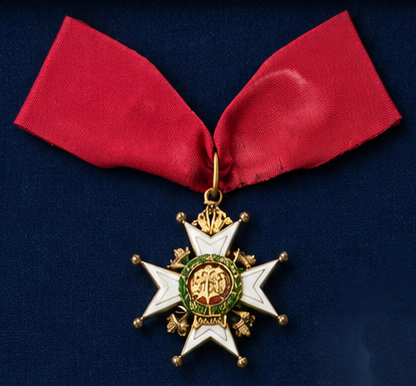
Companion of the Most Honourable Order of the Bath
1958 New Year Honours
The CB. Crimson ribbon.
What the CB is. The Companion of the Most Honourable Order of the Bath (Military Division) is one of the highest honours available to senior military officers. The Order dates to 1725 and has three classes: Knight Grand Cross (GCB), Knight Commander (KCB), and Companion (CB). A CB in the Military Division is typically reserved for brigadiers and major-generals and recognises sustained distinguished service at the highest levels of command. Unlike the DSO, it is not tied to a single action but to a period of outstanding contribution.
By the mid-1950s, Guy Gregson had risen from the field artillery of the Western Desert to general officer rank. After commanding the Royal Artillery in Korea (where the 37,818 shells of the Hook earned him the CBE) and serving as Brigadier Royal Artillery of the Rhine Army, he was appointed General Officer Commanding 1st Infantry Division and Commander of Salisbury Plain District, headquartered at Bulford on the Plain.
The division was weak — Cold War austerity had stripped it of resources — and the normal opportunities for training did not exist. Guy responded not by waiting for better times but by launching a series of military studies and experiments. The most important of these, in Erskine’s words, “has shown the way to a much lighter and more mobile fighting force.” Others tackled the unglamorous but critical problems of motor transport maintenance and accounting.
The timing is significant. Guy’s “lighter and more mobile fighting force” experiments at 1st Division began in January 1956 — a full year before Duncan Sandys’s Defence White Paper of February 1957, which slashed the armed forces from 700,000 to 375,000 and pivoted strategy to nuclear deterrence. Whether Guy anticipated the Sandys reforms or helped feed into them, he was on the doctrinal cutting edge of the British Army’s post-Suez transformation.
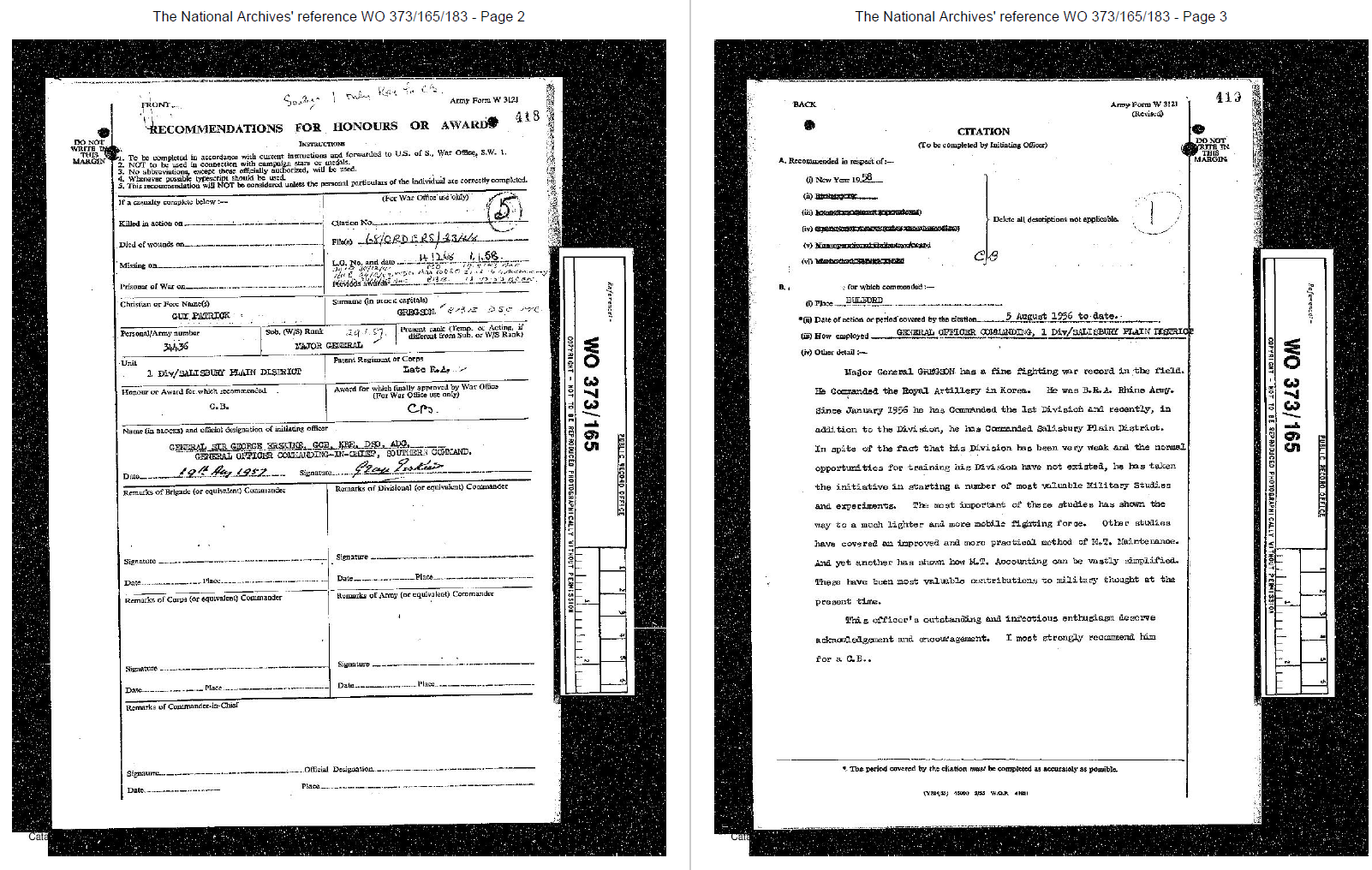
Verbatim Citation — Army Form W.3121, Revised
“Major General GREGSON has a fine fighting war record in the field.
He Commanded the Royal Artillery in Korea. He was B.R.A. Rhine Army.
Since January 1956 he has Commanded the 1st Division and recently, in addition to the Division, he has Commanded Salisbury Plain District.
In spite of the fact that his Division has been very weak and the normal opportunities for training his Division have not existed, he has taken the initiative in starting a number of most valuable Military Studies and experiments. The most important of these studies has shown the way to a much lighter and more mobile fighting force. Other studies have covered an improved and more practical method of M.T. Maintenance. And yet another has shown how M.T. Accounting can be vastly simplified. These have been most valuable contributions to military thought at the present time.
This officer’s outstanding and infectious enthusiasm deserve acknowledgement and encouragement. I most strongly recommend him for a C.B.”
Written by: General Sir George Erskine, GCB KBE DSO ADC, GOC-in-C Southern Command
·Date: 19 August 1957
·Period: 5 August 1956 to date
·Place: BULFORD
·Gazetted: 31 December 1957 (Supplement 41268, p. 3) — 1958 New Year Honours
The opening line of this citation — “Major General GREGSON has a fine fighting war record in the field” — is not a formality. It was written by a man who had personally witnessed that record.
General Sir George Erskine commanded 7th Armoured Division from January 1943 to August 1944. He was Guy’s divisional commander at Tunis, where the DSO recommendation passed through his headquarters. He was still in command at Villers-Bocage, where the Bar to DSO endorsement bears his signature as GOC. He had watched Guy coordinate 160 guns against Panzer-Lehr’s attack, had seen the report of CC Battery firing over open sights, had read Hinde’s account of a commanding officer moving “within a few hundred yards of the enemy.”
Twelve years later, in August 1957, Erskine had risen to General Sir George Erskine, GCB KBE DSO ADC, GOC-in-C Southern Command. Guy was again under his command, this time at Bulford on Salisbury Plain. The same man who had endorsed two battlefield gallantry awards now sat down and wrote a recommendation for the CB based on Guy’s peacetime innovation. The phrase “outstanding and infectious enthusiasm” may read as a general’s pleasantry. From Erskine, who had been at Villers-Bocage, it was a statement of personal knowledge.
Three awards. One professional relationship. Twelve years. This is one of the most striking threads in the biography — a career-spanning connection between a divisional commander and the gunner officer he first recognised in the dust of Tunis.
Beyond the four gallantry and distinguished service awards, Guy Gregson’s medal tray includes honours for Korea, two foreign decorations from France, two Mentions in Despatches, and the campaign stars that trace his path from East Africa through the Western Desert, Italy, Normandy, and Korea.
CBECroix de Guerre ×2Campaign StarsService & Korea Medals
CBE
1953 — Korea
Commander of the Order of the British Empire (Military Division). Awarded for Guy’s service as CRA of 1st Commonwealth Division. The Third Battle of the Hook saw his fire plan deliver 37,818 shells. Gazetted Supplement 40036.
Mention in Despatches (1st)
1943 — Middle East
For operations 1 May to 22 October 1942 in the Western Desert. Gazetted Supplement 36065. Denoted by the bronze oak leaf on the War Medal ribbon.
Mention in Despatches (2nd)
1945 — North-West Europe
For operations in NW Europe: Normandy through France, Belgium, and into Germany. Gazetted Supplement 36994.
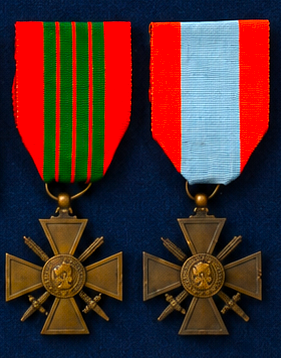
Croix de Guerre (Normandy)
Gazetted 1947 — France
Awarded by the French Republic for the NW Europe campaign. Gazetted Supplement 37998.
Croix de Guerre (Korea)
c. 1953 — Korea
A second Croix de Guerre. Per Marcus: “Iris went to a special service in Lincoln Cathedral to collect it.” Two Croix de Guerre, two wars, a decade apart.
Campaign Stars ×4
1939–1945
1939–45 Star, Africa Star (8th Army clasp), Italy Star, France & Germany Star. Each traces a chapter of the war from Sudan through to VE Day.
Korea Medal
1952–53
The British Korea Medal for service with the 1st Commonwealth Division, including the decisive Hook battles.
United Nations Korea Medal
1952–53
Awarded by the UN to all forces serving under UN Command in Korea. Blue-and-white-striped ribbon.
Coronation Medal 1953
2 June 1953
Issued for the Coronation of Queen Elizabeth II. Guy was serving in Korea. His gunners fired red, white and blue smoke shells that day.
The Machinery of Recognition
How Military Honours Work
A military decoration is never self-awarded. It is the end product of a chain of professional judgement, from the officer who witnessed the action to the sovereign who confers the honour. Understanding that chain is essential to reading the citations.
Every recommendation begins at the lowest level — typically the commanding officer of a brigade or the unit immediately above the nominee. The recommending officer completes an Army Form W.3121, describing the action, the individual’s contribution, and the honour proposed. That form then passes upward through the chain of command: from brigade to division, from division to corps, from corps to army, and from army to theatre command or the War Office. At each level, a senior officer endorses the recommendation, adds his own assessment, and signs the form. Any officer in the chain can downgrade the proposed award, upgrade it, or reject it outright.
Initiation
Brigade
The recommending officer — typically the brigade commander — writes the citation and proposes the award
Endorsement
Division
The GOC adds his assessment. May include the CRA’s technical endorsement for gunner awards
Endorsement
Corps
The corps commander evaluates relative merit across multiple divisions
Approval
Army / Theatre
The army commander or C-in-C grants the award. Published in the London Gazette
“Immediate” vs. Periodic Honours. There are two routes. An “immediate” award is recommended in direct response to a specific action and processed rapidly — weeks, not months. It is the most prestigious form of military recognition because it ties the honour directly to a named battle. Both Guy’s DSO and his Bar to DSO were immediate awards. A periodic honour, by contrast, is submitted during the regular twice-yearly honours rounds (New Year and King’s/Queen’s Birthday) and recognises sustained distinguished service over a period. Guy’s CB was a periodic award, recommended in August 1957 for the New Year 1958 Honours List.
The significance of each endorser is not merely bureaucratic. When the Commander Royal Artillery of 7th Armoured Division wrote “This officer has been outstanding throughout” on Guy’s DSO form, that was a professional gunner’s assessment of a fellow gunner — the opinion of the one man in the division best qualified to judge artillery performance. When Montgomery’s Eighth Army headquarters signed the form onward, that carried the weight of the most famous British general of the war.
The Men Who Signed the Forms
Key People in the Chain
Brigadier W.R.N. “Looney” Hinde
Commander, 22nd Armoured Brigade
Commanded 22nd Armoured Brigade through both DSO actions. He initiated the DSO recommendation at Tunis in May 1943 and personally wrote the Bar to DSO citation at Villers-Bocage in June 1944 (“I strongly recommend him for the immediate award of a Bar to the DSO”). The same brigade commander, witnessing the same gunner officer, in two of the most consequential actions of the European war.
The Erskine Double-Link. Commanded 7th Armoured Division (January 1943 – August 1944) during both the Tunis and Villers-Bocage actions. Endorsed both DSO recommendations. Twelve years later, as General Sir George Erskine, GOC-in-C Southern Command, he personally wrote the CB citation for Guy’s work at 1st Division. Three awards, one professional relationship.
Field Marshal Bernard Montgomery
GOC Eighth Army
The DSO recommendation passed through Eighth Army headquarters in June 1943, during Montgomery’s command. The signature on the form, though partially illegible, is almost certainly Montgomery’s. By the time of Villers-Bocage, Montgomery had moved to 21st Army Group and was no longer in Guy’s direct chain — but it was Montgomery who subsequently relieved both Erskine and Bucknall.
Lieutenant-General Gerard Bucknall
Commander, XXX Corps
Endorsed the Bar to DSO recommendation as Commander XXX Corps. Bucknall was relieved of command by Montgomery in August 1944, two months after Villers-Bocage, as part of the wider shake-up of senior officers following the slow progress around Caen. His endorsement of Guy’s award was one of his last acts in the chain of command.
Putting the Record in Context
How Rare Are These Awards?
Statistics alone do not convey what these awards meant. But they do convey how few officers earned them.
~12,000
DSO
Awarded in the Second World War. An “immediate” DSO, for a specific named action, is rarer still.
~500
Bar to DSO
Awarded in the Second World War. Significantly rarer — a second recognition of the same exceptional standard.
DSO & Bar
An Extremely Select Group
An officer holding both the DSO and a Bar has been recognised twice for distinguished service under fire. Guy earned both in thirteen months.
~200/yr
CB (Military)
Approximately 200 per year in the 1950s, reserved for brigadiers and above. The highest tier of the Order of the Bath available to a major-general.
~11,000
Military Cross
Awarded in the Second World War. The “junior officers’ gallantry award,” though in practice given up to the rank of major.
CB CBE DSO* MC
The Complete Record
Four gallantry/service decorations spanning 1941–1958, across three wars and five campaigns. The asterisk denotes the Bar. The post-nominal string of a man who spent his entire career under fire or preparing others for it.
Fifteen Medals — Honours & Decorations of Maj-Gen G.P. Gregson
Honours & Decorations of Major-General Guy Patrick Gregson, CB CBE DSO & Bar MC
Royal Horse Artillery · 1906–1988
Compiled from the Source Library — Vigilo: A Private Family Archive
For Dad, on his 80th birthday.